
2023
B2B Dealer Portal
Not every commerce product is built for millions of customers.
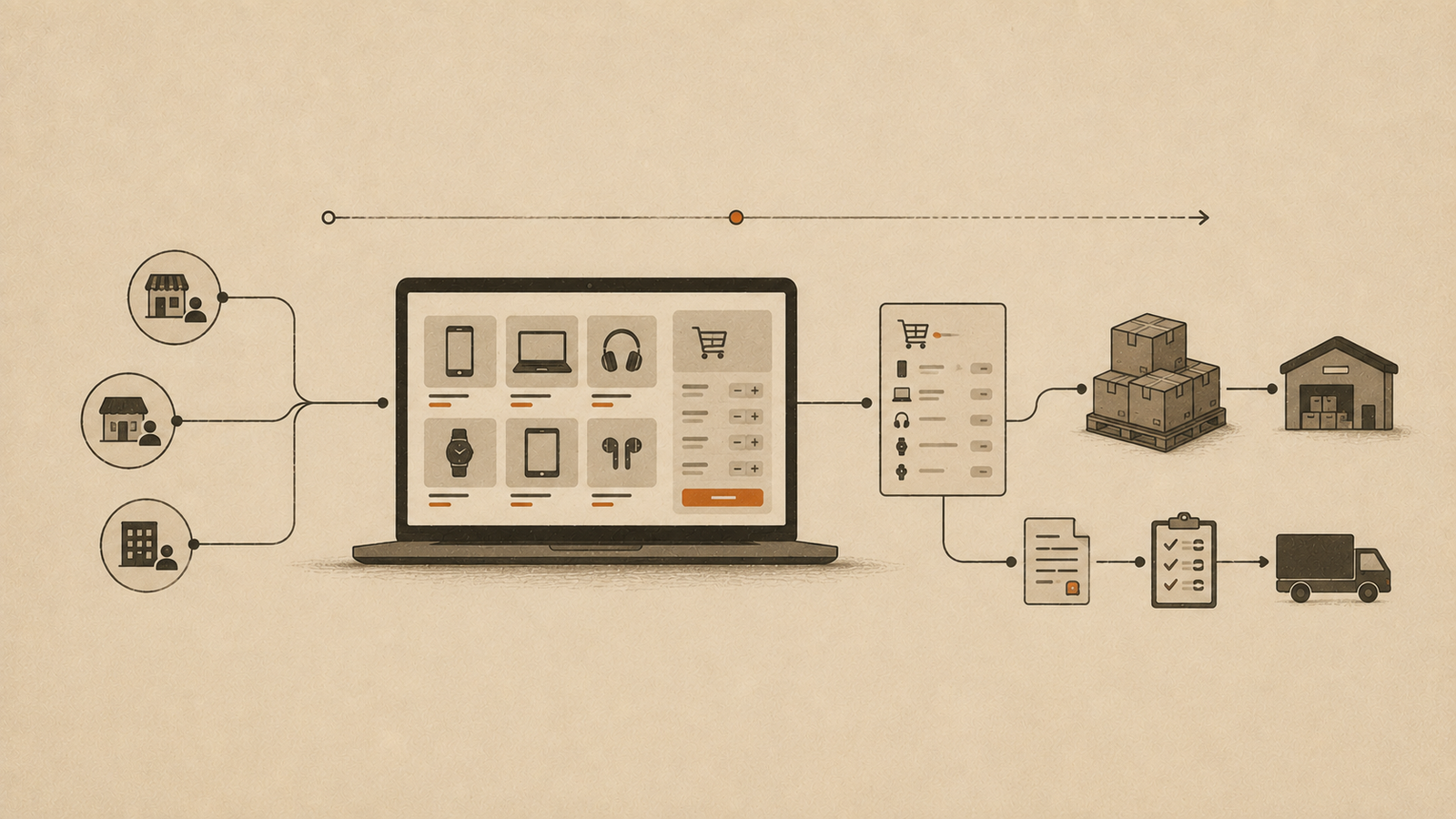
For several months, I temporarily managed Erajaya’s B2B Dealer Portal, a commerce platform used by business partners to purchase products from its distribution businesses. The audience was smaller than the consumer products I was used to, but each transaction carried significantly more weight.
It was my first close look at how different ecommerce becomes when the customer is a business rather than an individual.
MY CONTRIBUTION
I took over the product relatively early in my time at Erajaya after the previous Product Manager left and before a permanent replacement was available. Because this was temporary ownership, my goal wasn’t to arrive with a new product vision or redesign a system I had only recently learned. The first priority was understanding how the product worked, what dealers and operational teams actually depended on, and which improvements were reasonable to make during the transition. Over the following months, I managed several enhancements across both sides of the platform: improving parts of the purchasing experience for dealers while also supporting workflows used by the teams operating the business behind it.
PROBLEM
At first glance, the Dealer Portal looked familiar. Products, orders, purchasing—it still looked like ecommerce. But the context behind those interactions was different. Dealers weren’t shopping like individual consumers. They were purchasing as businesses, often with different expectations, larger order values, and workflows that involved operational processes beyond the interface itself. That meant patterns that felt obvious from B2C commerce couldn’t simply be assumed to work the same way here. The challenge for me was learning enough of that context quickly while keeping an already-running product moving during a transition in ownership.
OUTCOME
During the transition period, the Dealer Portal continued operating while several improvements were delivered across dealer-facing and internal operational experiences. My ownership of the product eventually ended when the organization transitioned the scope forward. There wasn’t a dramatic launch or transformation at the end of this project—and I don’t think there needed to be. The product kept moving during a period when ownership could easily have become a gap.
IMPACT
The biggest impact of this short period wasn’t the number of features delivered. It was exposure to a different type of commerce problem. B2C had trained me to think about scale largely through customers, traffic, and transaction volume. B2B added another dimension: the consequence of each individual transaction. A smaller user base can still support a product where reliability, operational clarity, and transaction confidence matter enormously. It made me much more careful about using user volume as a shortcut for product complexity.
LET'S TALK
Something worth talking about?
Product, systems, something you're building, or just an idea worth comparing notes on—feel free to reach out.